What Was So Significant About Peter's Confession of Jesus?

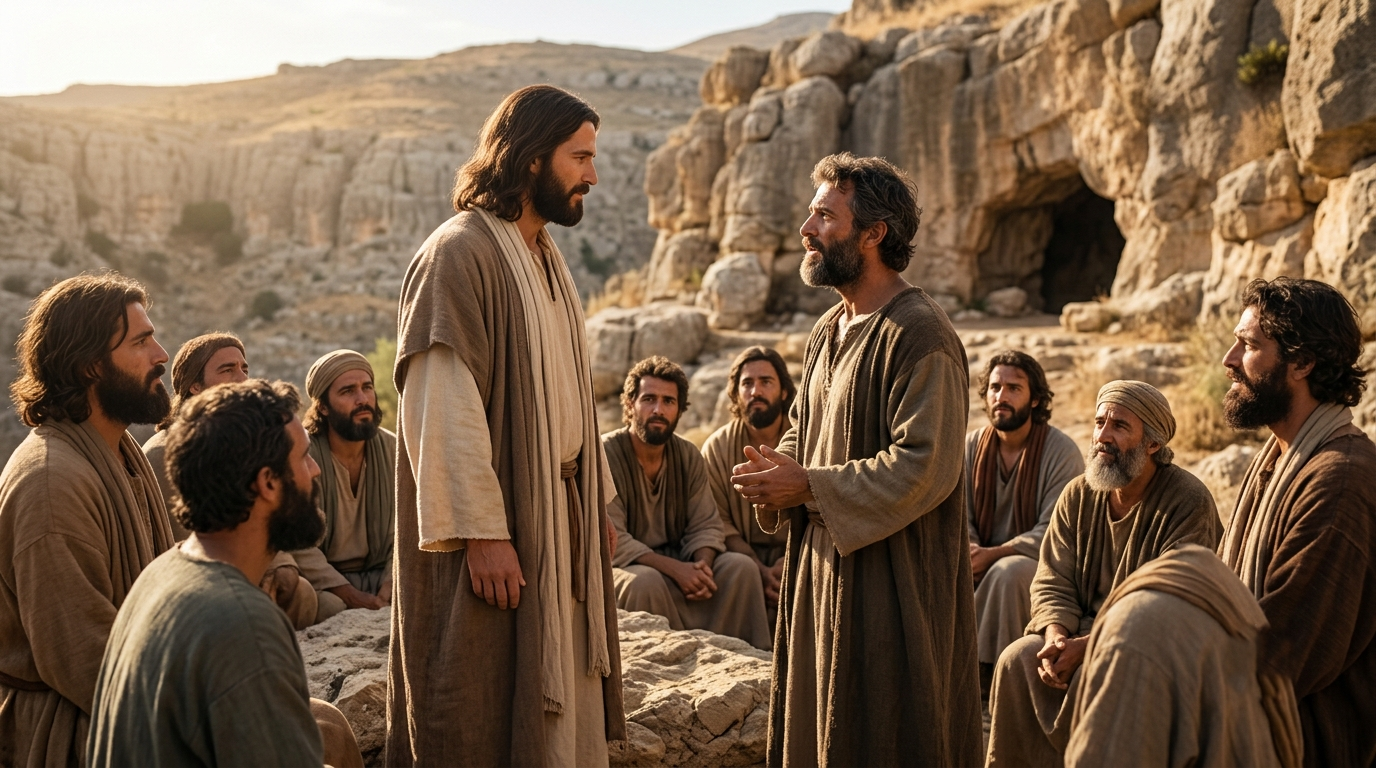
A Long Journey Reaches Caesarea Philippi – Matthew 16:13
Jesus and His disciples were a long way from home, about 25 miles north of Galilee, when Jesus asked His disciples, “Who do men say that I, the Son of Man, am?” (Matthew 16:13 NKJV) Some scholars think that Jesus asked this question during the Spring of year 29.
Just about 9 months earlier is thought to be the time that Jesus sent His disciples on a ministry tour, where they preached the kingdom of God, and where Jesus “gave them power and authority over all demons, and to cure diseases” (Luke 9:1-2, Matthew 10:1-15). Most likely they heard several opinions about Jesus as they traveled. In addition to their tour, the disciples must have handled crowd control around Jesus on a daily basis and probably heard ideas from the crowd on those occasions as well.
The Crowds Were Divided about Jesus’ Identity – Matthew 16:14
Even after almost 2 years of public ministry, the crowds were divided about the identity of Jesus. The disciples reported to Jesus, “Some say John the Baptist, some Elijah, and others Jeremiah or one of the prophets” (Matthew 16:14 NKJV). These 3 answers were apparently so widespread that they were the same ideas that influenced the thinking of royalty, such as Herod the tetrarch (Luke 9:7-9).
Jesus Confronts His Own Disciples about His Identity – Matthew 16:15
As we read of Jesus calling His disciples near the start of His ministry, some seem to have understood at an early stage that Jesus was indeed the Messiah that the Old Testament scriptures had predicted. As early as the initial call to Andrew, Peter and Philip, Philip tells Nathanel, “We have found Him of whom Moses in the law, and also the prophets wrote – Jesus of Nazareth, the son of Joseph” (John 1:43-45). Jesus miracle at the wedding in Cana apparently reinforced that idea (John 2:11).
However, it seems to have taken the disciples much longer to comprehend that Jesus was more than just the long-awaited leader that the Old Testament predicted. When Jesus stilled the storm, the disciples were completely bewildered and exceedingly fearful (Mark 4:35-41) as they asked, “Who can this be, that even the wind and the sea obey Him?” (v. 41). It was the type of sign that Pharisees would ask for, but would not be given (Matthew 16:1-4).
So, it was at Caesarea Philippi that Jesus directly confronted His disciples about His identity when Jesus asked them, “But who do you say that I am?” (v. 15). Peter’s answer revealed that he had connected two important concepts.
The Significance of Peter’s Confession – Matthew 16:16-17
When Jesus asked, “But who do you say that I am?” Peter answered, “You are the Christ, the Son of the living God” (Matthew 16:16 NKJV). By saying “You are the Christ,” Peter was confirming that Jesus was indeed the Messiah that the Old Testament scriptures had predicted.
However, when Peter added, “the Son of the living God” he also acknowledged that Jesus was more than just the foretold Messiah, Jesus was also God’s very own Son, come to live on earth in the flesh. Peter’s answer was so correct that Jesus immediately confirmed the truth that such a confession had to be revealed to Peter from God the Father (v. 17). So, Peter’s confession was the first time these 2 important concepts had been connected.
It Took Some Time for the Disciples to Comprehend Peter’s Insight
Most likely it was months later when the disciples gathered for the last supper before Jesus’ crucifixion. Even at the last supper Philip still appeared to not clearly understand the revelation that Jesus was God’s very own Son. When Jesus said, “If you had known Me, you would have known My Father also; and from now on you know Him and have seen Him” (John 14:7). Philip’s response was, “Lord show us the Father, and it is sufficient for us” (John 14:8), to which Jesus replied, “Have I been with you so long, and yet you have not known Me, Philip? He who has seen Me has seen the Father; so how can you say, ‘Show us the Father?’” (John 14:9).
A Revelation Becomes a Confession and a Conviction – Acts 2:36
The truth that Jesus was God’s long-awaited Messiah for the Jews was only part of God’s revelation. The truth that Jesus was also the Son of God, and therefore equal to God, was a revelation that grew into a confession, and that confession was confirmed by Jesus Himself (Matthew 16:16-17). That confession grew into a conviction that blossomed at Pentecost when Peter proclaimed, “Therefore, let all the house of Israel know assuredly that God has made this Jesus, whom you crucified, both Lord and Christ” (Acts 2:36, NKJV). That was a profound truth in a sermon that led to the salvation of approximately 3,000 people that day (Acts 2:41).